
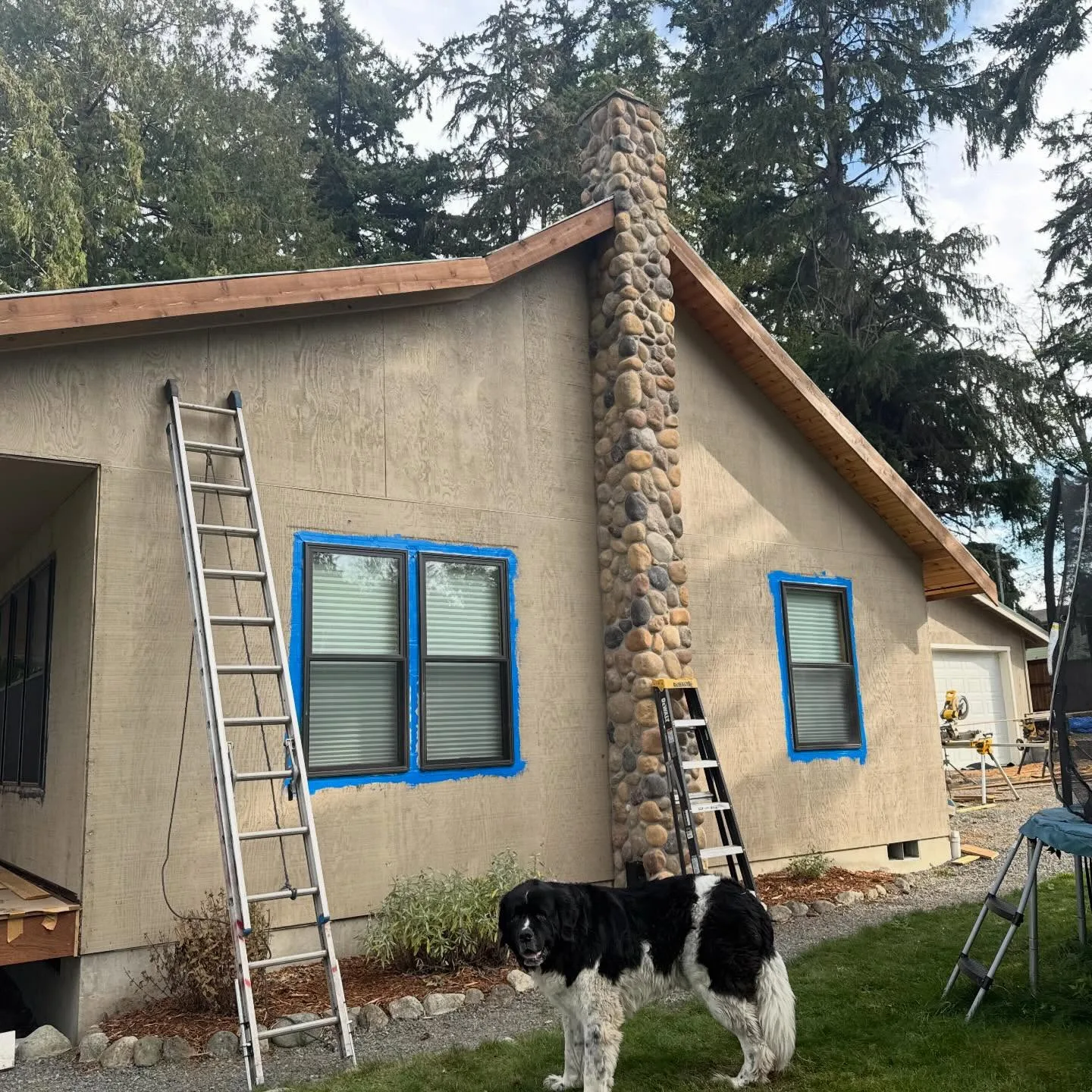
Should You Remodel or Rebuild an Older Whidbey Island Home?
Remodel when the structure and the foundation are sound, the location works and your plan fits the footprint. Consider a teardown and rebuild when the framing, the foundation and the systems are failing. The same goes for a house that cannot be made to work. On a waterfront or flood-zone lot, the shoreline and flood rules often decide it before the budget does.
Culver Built is based in Langley on South Whidbey Island, and we design and build both. We handle home remodeling for older island houses. When a house has to go, taking it down is the first phase of a new custom home.
When does a remodel make more sense than a rebuild?
A remodel keeps what still works, usually the foundation, the framing and the spot where the house sits. A national cost guide says demolishing a home’s interior costs far less than a full teardown. It calls partial demolition a smart option when most of the structure is still sound.
Older island homes can hide rot, old water damage or undersized framing behind the finishes. We find and fix structural, weather and moisture problems while we remodel.
Need more room? A home addition adds space without starting over. The state energy code holds an addition to its rules for new construction. In a remodel, only the parts you alter have to meet those rules.
When is tearing down and rebuilding the better choice?
When most of the structure needs replacing, a remodel ends up rebuilding the house in pieces. It can also leave you with the old house’s limits, such as its ceiling heights. A rebuild starts over on land you already own.
A rebuild follows the same path as when we build on your land, after the old house comes down. Our estimating study prices a full materials list with local vendors, then labor and work orders. You see a clear bottom line for the new house.
What does tearing a house down add to the cost?
A rebuild carries one cost a remodel does not: taking the whole house down. A national cost guide puts the average cost to demolish a house at $15,800 in 2026. It says most owners spend between $6,000 and $25,000, depending on home size, location and materials. These are market numbers, not our price list.
After demolition, the new house is priced like any other. Our guide to custom home costs on Whidbey Island has published ranges for that. For the remodel side, see our home remodel cost guide.
How do shoreline rules change the choice on a waterfront lot?
Island County’s shoreline jurisdiction includes land within 200 feet of the ordinary high-water mark. Inside it, the county generally requires review and approval for new construction and for exterior changes to existing structures.
The county’s shoreline program is chapter 17.05A of the county code. It treats a legally established home that misses today’s setbacks or buffers as conforming. Redevelopment, expansion or replacement of that home must still be consistent with the program. That includes no net loss of shoreline ecological functions.
The program’s definitions count a repair as a replacement once over 50 percent of the structure, by volume, is replaced. A repair also counts as a replacement when it costs more than 50 percent of the structure’s value. A nonconforming structure moved any distance has to come into conformance to the maximum extent feasible.
A nonconforming structure has another line: 60 percent of the fair market value of its replacement cost. Intentional changes that cost more must bring it up to all of the program’s standards.
Read together, these rules can treat keeping the house in place very differently from tearing it down and replacing it. Talk to Island County Planning and Community Development before you decide. The county approved an update to the program in September 2026. Its shoreline page says the update takes effect November 2, 2026, so confirm which version covers your application.
What changes in a mapped flood zone?
Federal flood insurance rules set a 50 percent line. Work costing 50 percent or more of the building’s market value before it starts is a substantial improvement. FEMA counts the building alone and leaves out the land, land improvements and accessory structures.
Island County’s flood code applies its floodplain development standards to new construction and to substantial improvements. FEMA treats a house that is voluntarily demolished and rebuilt as new construction, even if the old foundation is reused.
So in a mapped flood zone, a rebuild is held to the county’s floodplain development standards. So is a remodel that crosses the 50 percent line. A smaller remodel can stay under it, so confirm with the county how your project would be counted.
What do asbestos and septic rules add on Whidbey Island?
Asbestos comes first on both paths. The Northwest Clean Air Agency says every remodeling or demolition project in Island County must check for it before starting. A teardown adds more steps. Every building to be demolished must first be inspected by a building inspector with AHERA certification.
The agency must be notified of any structure demolition over 120 square feet. Its fact sheet lists a 10-day federally mandated waiting period for asbestos demolition projects, except approved emergencies. Island County’s demolition permit submittal includes documentation from the agency.
Septic rules follow bedrooms. Island County Public Health requires a septic permit before a change that increases wastewater flow, such as adding a bedroom. The septic design follows the planned use of the property, such as the number of bedrooms.
A rebuild’s building permit submittal needs a site registration and septic design, a rule in place since March 1, 2024. It also needs an approved access permit, an address and water availability verification. A septic designer and Island County Public Health handle the design, and we plan our site work around it.
Remodel vs rebuild: which rules does each path set off?
| Rule | Remodel | Tear down and rebuild |
|---|---|---|
| Asbestos | Check for it before work starts | AHERA inspection first, agency notice over 120 square feet, a 10-day wait on asbestos demolition projects |
| Energy code | The parts you alter, plus any addition, meet the code for new construction | The whole house meets the code for new construction |
| Flood zone | Floodplain standards apply once the work reaches 50 percent of the building’s market value | New construction, so the floodplain standards apply |
| Shoreline | Past 50 percent of the structure’s volume or value, a repair counts as a replacement | Replacement must be consistent with the program, including no net loss |
| Septic | A septic permit before adding a bedroom | A site registration and septic design with the permit submittal |
The county makes each of these calls, so confirm your project with Island County. For the rest of the county’s list, see our Island County building permit guide.
Where do you start with an older Whidbey Island home?
Start with the house you have and the lot it sits on. Ask the county early whether the lot is in shoreline jurisdiction or a mapped flood zone. Before a redesign, we draw as-built drawings of the house as it stands.
If the house or the rules point to a rebuild, we design and build the new home too. We are licensed, bonded and insured, with more than 30 years of building experience. See how our home remodeling work runs, or call or text (360) 544-9027 for a free estimate.